4 techniques for keeping a character consistent from shot to shot
It's the number one problem in AI video fiction. Here are four methods, from the simplest to the most robust, and when to use each one.
Contents
In a film, the audience has to recognize the hero in a split second. A video model, though, reinvents everything with every generation. Here are four ways to stop it.
1. The character sheet
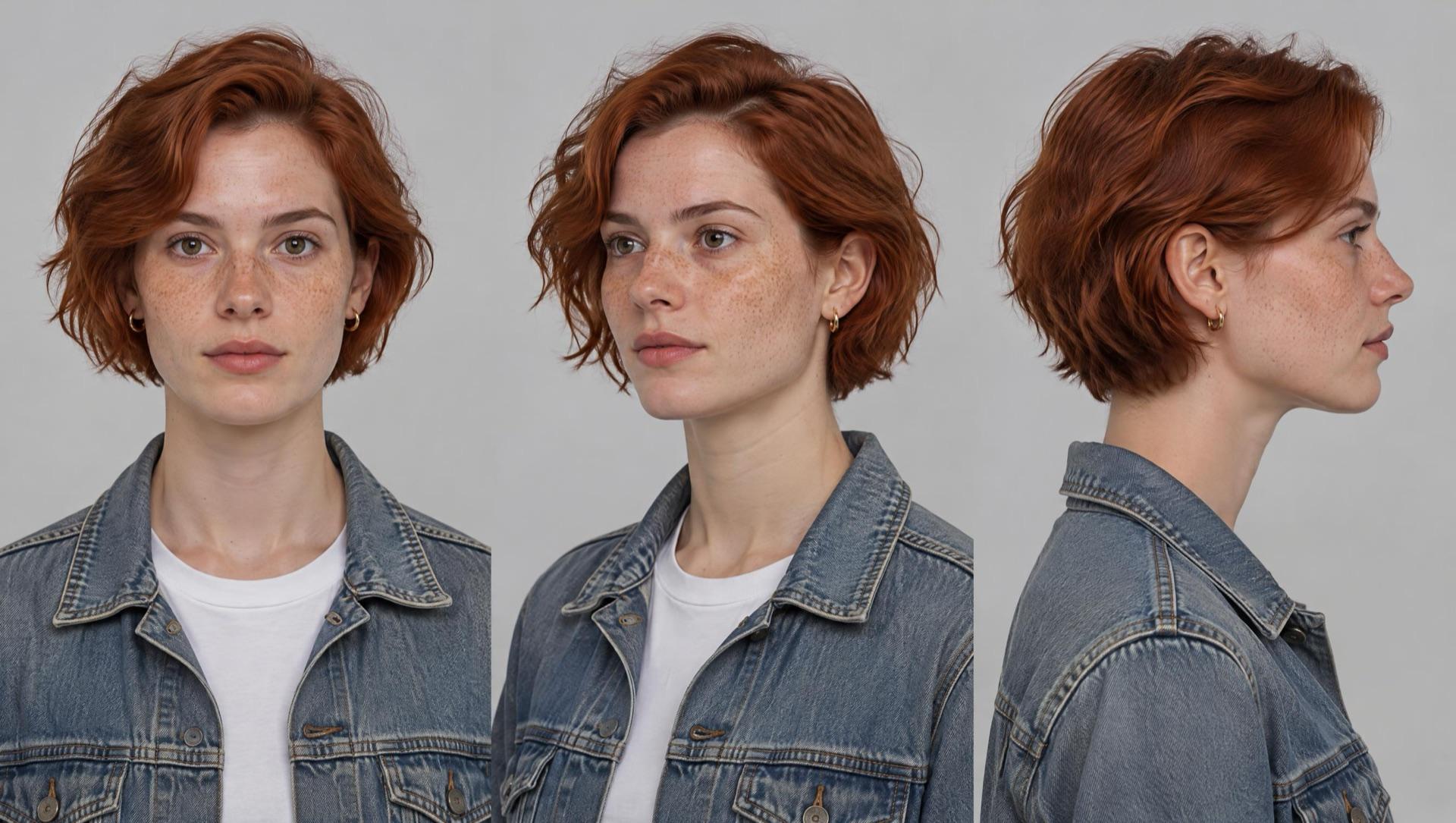
Create a reference sheet showing your character from the front, in profile, and in three-quarter view, in costume, against a neutral background. That sheet becomes the source for all your starting images.
Also write the character's description once and for all, and paste it word for word into every prompt:
Léa, 28, short red hair, freckles,
faded denim jacket, white T-shirt, small gold hoop in her left ear.
Precise details like the earring and the jacket help the model land on the same face again.
2. Reference images
Several tools let you upload one or more images of the character along with the prompt. The model treats them as a template to follow. It's the fastest method: no technical prep, and decent results in most shots.
3. Always start from an image
Generate every starting image with your character sheet as a reference, then animate it. Because the face is already in the first frame, the video holds onto it far better than if it had to invent it.
4. Train a LoRA
For a long project, like a series or a campaign, you can teach the character to a model using around twenty images. It takes more prep, but the face then holds from shot to shot with no extra effort.
Editing does the rest
Even with these techniques, two shots will never be perfectly identical. Let your shot breakdown help:
- Avoid cutting two close-ups of the face back to back.
- Slip in a wide shot, a detail, or a reverse angle between them.
- Keep an outfit and an accessory that are instantly recognizable: that's what the eye follows.
This article was prepared with the help of AI, then checked and approved by Victor Lignel. How we use AI