From script to final cut: making an AI short film in 7 steps
You don't make a two-minute film by firing off random generations. Here's the production order that saves you from starting over.
Contents
The classic mistake is opening a generator and hunting for the film one generation at a time. You end up with beautiful images and no story. The filmmakers who actually finish their films all follow roughly the same order.
1. Write short
Two minutes is one page of script. One situation, one character, one twist. Limit sets and roles: every extra element has to stay consistent for the entire film.
2. Break it down
Turn the script into a shot list. For each shot: what we see, the shot size, the duration, what we hear. A two-minute film runs between twenty and thirty shots.
3. Lock in the style and the characters
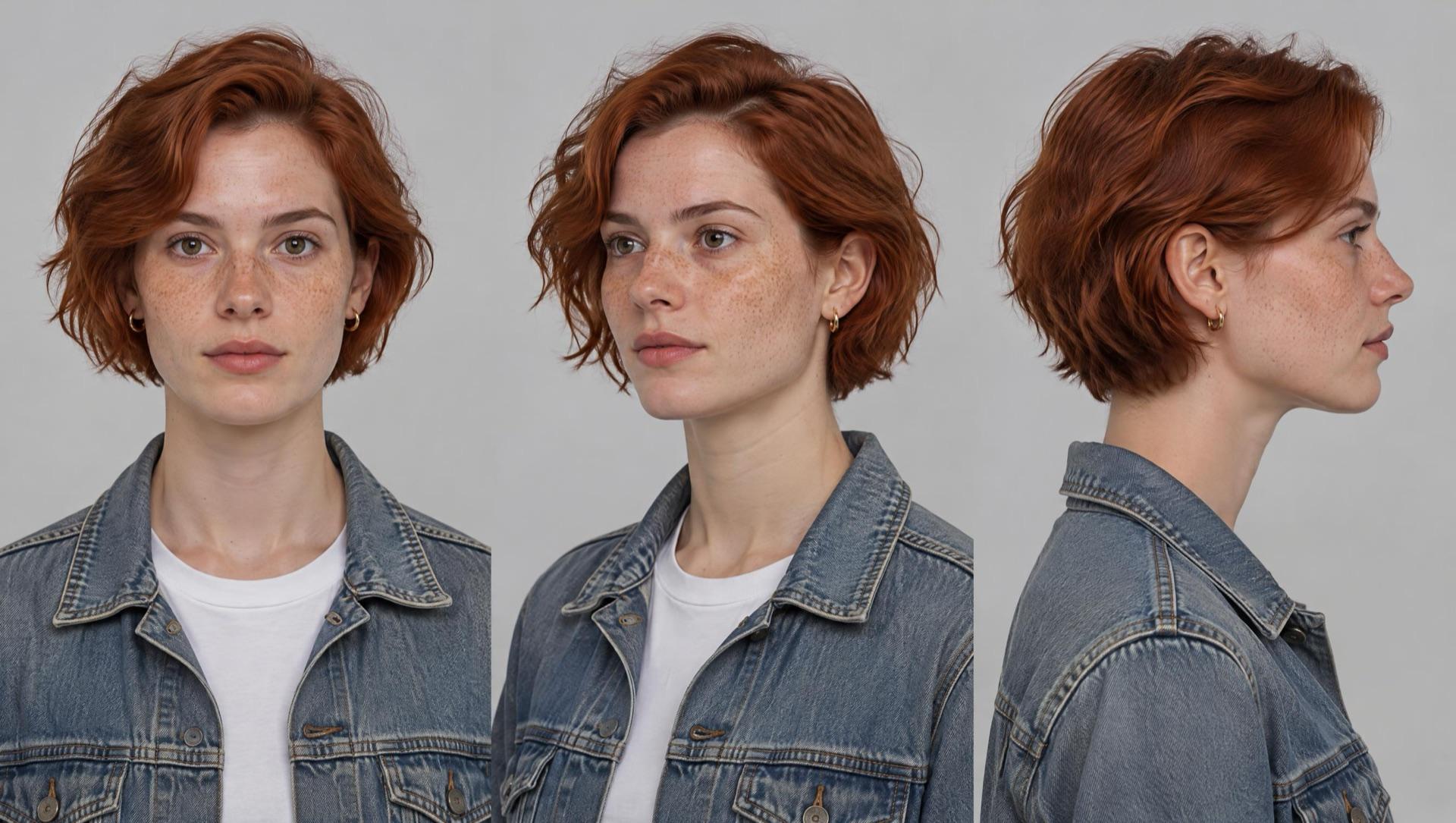
Before any scene, create your character sheets and two or three images that define the look: palette, lighting, grain. Everything else will follow from them.
4. Generate the starting images
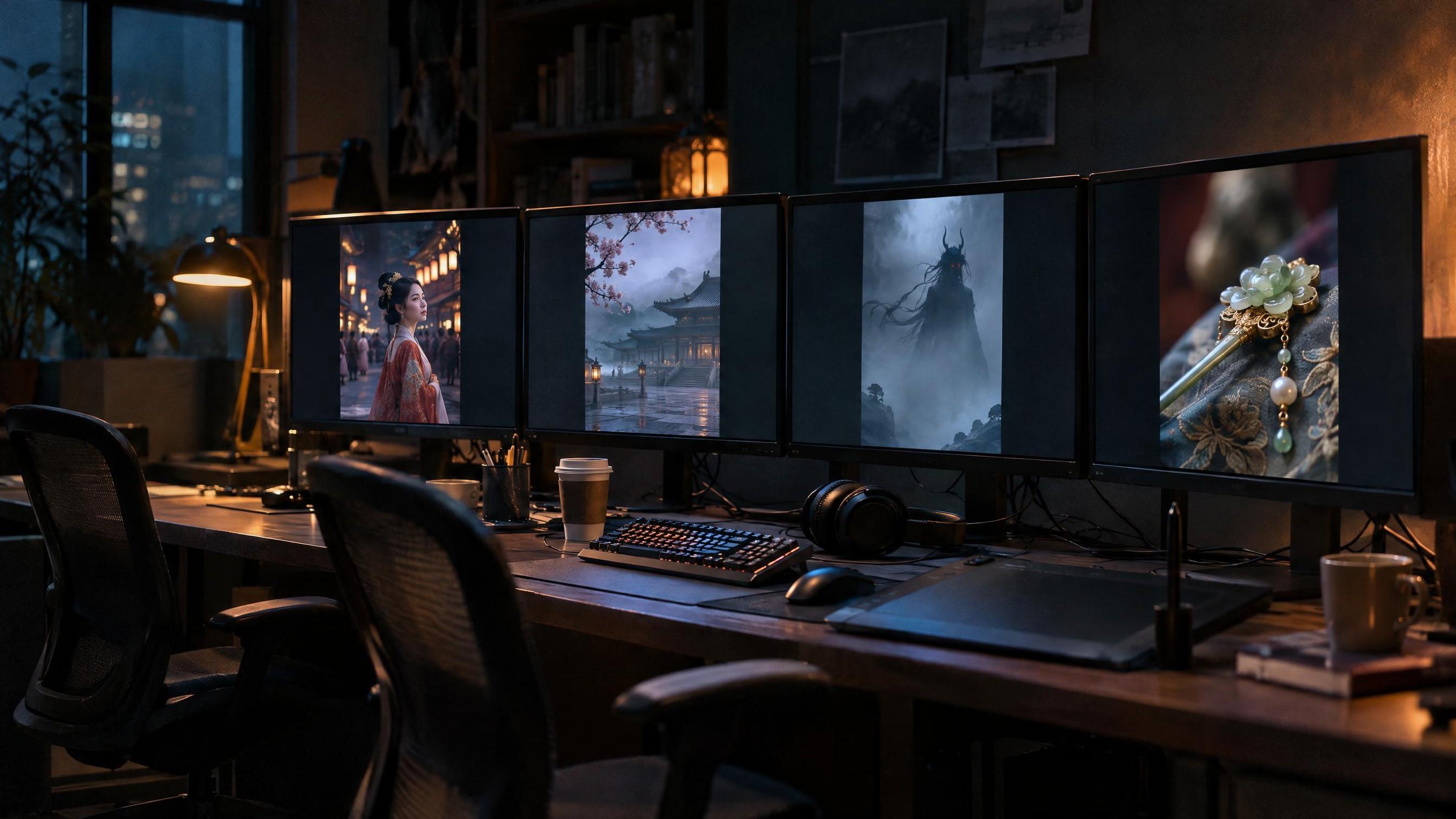
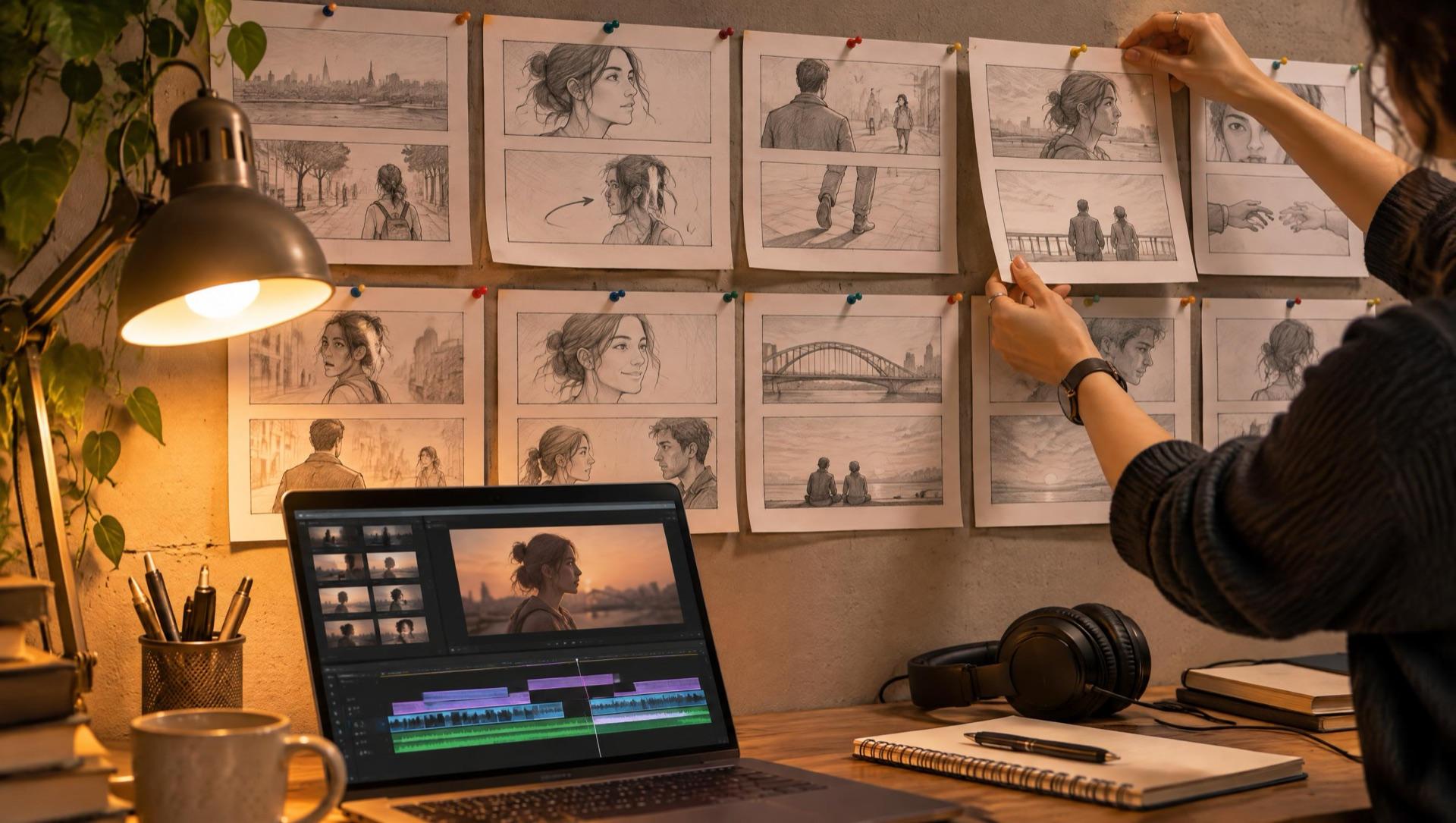
One image per shot, in the order of the film. Lay them out side by side and you have a storyboard. This is the moment to fix anything that doesn't match, while it costs almost nothing.
5. Animate
Turn each image into video, with a prompt that describes only the motion. Generate each shot three or four times and keep the best take.
6. Lay down the sound
Voices, sound effects, music. Do it before the final cut: sound sets the rhythm and makes viewers forget small flaws in the picture.
7. Edit and finish
Cut shorter than you think you should. An AI video shot is often at its best in its first three seconds. Finish with color grading, which unifies the colors of shots generated separately.
How much time should you plan for?
For a first two-minute film, count on several days of work, more than half of it before the first video generation. That prep time is what separates a string of shots from an actual film.
This article was prepared with the help of AI, then checked and approved by Victor Lignel. How we use AI